
Is Laser Teeth Whitening Safe?
If you’re considering laser teeth whitening, you’re probably wondering: “Is this actually safe for my teeth?”
It’s a valid question – after all, the treatment uses strong chemicals and advanced technology on one of your most visible assets.
The short answer? Yes, laser teeth whitening is safe when performed by qualified dental professionals.
What exactly is laser teeth whitening?
Before we discuss safety, it’s helpful to understand what the treatment involves. Despite the name “laser” whitening, most modern procedures actually use LED light technology rather than traditional lasers.
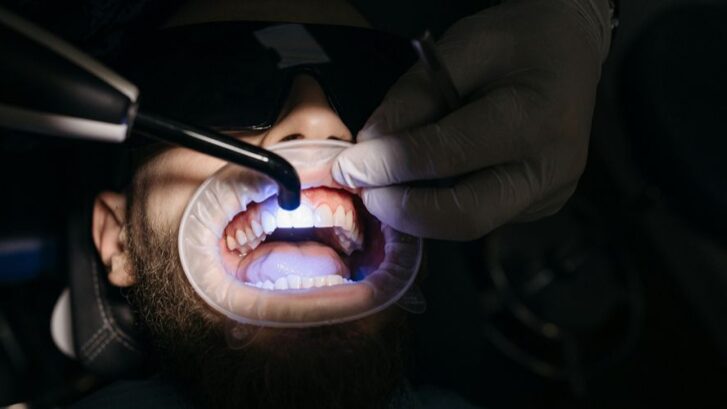
During a professional laser teeth whitening treatment, a specially formulated bleaching gel (containing hydrogen peroxide or carbamide peroxide) is carefully applied to your teeth. A Blue Spectrum LED light is then directed onto your teeth to activate the whitening gel, accelerating the breakdown of stain molecules.
The entire process typically takes around 60 minutes, with the light applied in cycles of 15-20 minutes.
The result? Teeth that are several shades whiter in just one appointment.
Why professional laser whitening is safe
The safety of laser teeth whitening depends on three key factors: professional supervision, proper technique, and regulated products.
Professional oversight throughout
When you have your teeth whitened at a reputable clinic, a GDC-registered dentist oversees your entire treatment. This isn’t just a formality – it’s a legal requirement in the UK and a crucial safety measure.
Before any whitening begins, your dentist will:
- Examine your teeth and gums thoroughly
- Check for cavities, cracks, or gum disease
- Assess your suitability for whitening
- Discuss your medical history and any concerns
This initial assessment ensures you’re a good candidate for treatment and helps prevent potential complications.
Protective measures during treatment
Safety protocols are built into every stage of the whitening process:
- Gum protection: A soft shield or protective paste is applied to your gums before the whitening gel touches your teeth, preventing irritation to soft tissues.
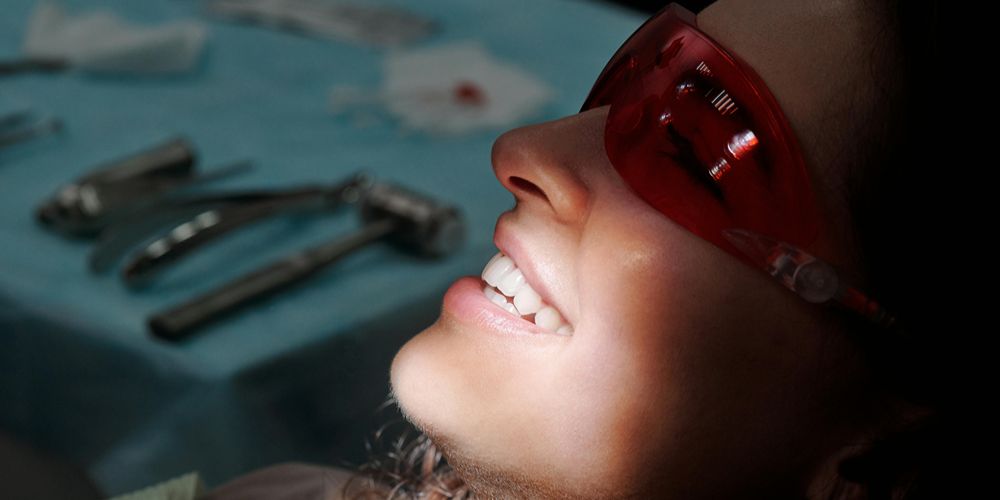
- Eye protection: You’ll wear protective glasses to shield your eyes from the LED light.
- Controlled application: The whitening gel is precisely applied only to tooth surfaces, avoiding contact with gums, lips, and tongue.
- Temperature monitoring: Modern LED lights operate at safe wavelengths that activate the gel without overheating your teeth.
Regulated products and concentrations
In the UK, teeth whitening is strictly regulated. Professional dentists can use whitening products containing up to 6% hydrogen peroxide – the optimal concentration for effective, safe whitening.
Compare this to over-the-counter products, which are limited to just 0.1% hydrogen peroxide. Whilst this might seem safer, it’s actually ineffective, leading people to overuse products or seek out illegal, unregulated alternatives that can cause serious damage.
Potential side effects (and how they’re managed)
Like any cosmetic treatment, laser teeth whitening can cause some temporary side effects. The good news? They’re generally mild, manageable, and short-lived.
Tooth sensitivity
This is the most common side effect. Your teeth may feel sensitive to hot, cold, or sweet foods and drinks for 24-48 hours after treatment.
- Why it happens: The whitening process temporarily opens the pores in your tooth enamel, exposing the inner layers.
- How it’s managed: Your dentist may apply a desensitising agent before treatment, and you can use sensitivity toothpaste afterwards.
- When it resolves: Usually within 1-3 days.
Gum irritation
Some people experience mild gum tenderness or slight whitening of the gums where the gel has made contact.
- Why it happens: If the protective barrier isn’t perfectly positioned, small amounts of gel can touch the gums.
- How it’s managed: Protective barriers are carefully applied, and treatment is monitored throughout.
- When it resolves: Typically within a few days.
Temporary dehydration
Immediately after treatment, your teeth may feel slightly dry or “chalky.”
- Why it happens: The whitening process temporarily dehydrates your teeth.
- How it’s managed: This is a normal part of the process and doesn’t require intervention.
- When it resolves: As your teeth rehydrate over the next 24-48 hours.
Uneven whitening
Occasionally, teeth may whiten unevenly, particularly if you have existing dental work or deep stains in certain areas.
- Why it happens: Whitening only works on natural tooth enamel, not crowns, veneers, or fillings.
- How it’s managed: Your dentist discusses this during consultation and may recommend additional treatments.
- When it resolves: Follow-up treatments can address any unevenness.
What makes laser whitening safer than alternatives?
Let’s compare professional teeth whitening to other options:
Professional vs. DIY whitening
Professional laser whitening:
✓ Performed by qualified dentists
✓ Uses regulated, safe concentrations
✓ Includes protective measures
✓ Monitored throughout treatment
✓ Addresses underlying dental issues first
DIY kits and strips:
✗ No professional supervision
✗ Ineffective concentrations or dangerous illegal products
✗ No gum protection
✗ Risk of overuse and enamel damage
✗ Can mask serious dental problems
Professional vs. illegal whitening
In the UK, it’s illegal for beauty salons, shopping centre kiosks, or anyone other than a qualified dental professional to perform teeth whitening.
These illegal operators:
- Lack proper training and dental knowledge
- Can’t identify contraindications
- Don’t have insurance for dental procedures
- May use dangerous, unregulated products
- Can’t legally access professional-grade equipment
The risks of illegal whitening include severe gum burns, permanent tooth damage, and even nerve damage requiring root canal treatment.
Read more: What Is The Safest Teeth Whitening Procedure?
Who shouldn’t have laser teeth whitening?
Whilst laser whitening is safe for most people, it’s not suitable for everyone. You should avoid treatment if you:
- Are under 18 years old
- Are pregnant or breastfeeding
- Have untreated tooth decay or cavities
- Have severe gum disease
- Have extremely thin or damaged enamel
- Have epilepsy or certain other medical conditions
Additionally, laser whitening doesn’t work on dental restorations like crowns, veneers, or fillings. If you have visible restorations, discuss options with your dentist during consultation.
Long-term safety: Will it damage my teeth?
One of the biggest concerns people have is whether teeth whitening causes permanent damage. The evidence is reassuring.
Enamel safety
When administered correctly by trained professionals, laser teeth whitening does not damage tooth enamel. The whitening gel works by oxidising stain molecules within the tooth structure – it doesn’t erode or wear away enamel.
Research has shown that professional whitening treatments, when used at appropriate concentrations and frequencies, maintain the structural integrity of tooth enamel.
Nerve and pulp safety
Modern LED light systems operate at wavelengths specifically chosen to activate whitening gel without generating excessive heat. This prevents damage to the tooth pulp (the innermost layer containing blood vessels and nerves).
Temperature monitoring during treatment ensures your teeth don’t overheat, protecting the delicate internal structures.
Long-lasting results without repeated treatments
With proper care, professional laser whitening results can last 18-24 months. This means you won’t need frequent treatments, reducing any cumulative effects on your teeth.
Compare this to DIY methods that require constant reapplication, increasing exposure to whitening agents and potentially causing more harm than good.
How to ensure the safest treatment
If you’ve decided laser whitening is right for you, follow these guidelines to ensure the safest possible experience:
Choose a qualified professional
Always seek treatment from a dentist registered with the General Dental Council (GDC). You can verify registration on the GDC website.
Look for:
- Proper qualifications and registration
- A professional clinic environment
- Transparent pricing and treatment plans
- Willingness to answer your questions
- Before-and-after photos of real patients
Attend your consultation
Never skip the consultation appointment. This is your opportunity to:
- Have your dental health assessed
- Discuss any concerns or medical conditions
- Ask about the specific products being used
- Understand what to expect during and after treatment
- Ensure you’re a suitable candidate
Follow aftercare instructions
Your dentist will provide specific aftercare guidance. Following these instructions isn’t just about maintaining results – it’s about protecting your teeth during the recovery period.
This includes:
- Avoiding staining foods and drinks for 48 hours
- Using sensitive toothpaste if needed
- Waiting 30 minutes before brushing after treatment
- Attending follow-up appointments if recommended
Communicate any concerns
If you experience unusual symptoms, prolonged sensitivity, or anything that concerns you after treatment, contact your dentist immediately. Early intervention can prevent minor issues from becoming major problems.
Laser whitening is safe (when done properly!)
Laser teeth whitening has an excellent safety record when performed by qualified dental professionals using proper techniques and regulated products.
The key is choosing a reputable clinic where GDC-registered dentists carry out treatments. With professional oversight, protective measures, and appropriate aftercare, laser whitening delivers dramatic results with minimal risk.
Yes, you might experience some temporary sensitivity or minor gum irritation – but these effects are manageable and short-lived. The alternative – DIY kits or illegal treatments – carries far greater risks, including permanent tooth damage.
Ready for a safely brightened smile?
Curious about laser teeth whitening? At Harley Teeth Whitening, all treatments are performed by fully qualified, GDC-registered dentists using advanced LED light technology in a safe, comfortable environment. Book your free smile assessment today and discover how we can safely transform your smile.